

How Do Pile-Up Crashes Happen and Who is Responsible for the Damage?
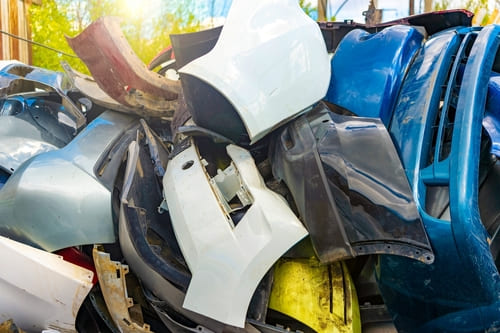 Multi-vehicle pile-ups involve three or more cars and may involve more than one driver at fault. Several drivers may each have made a mistake, which means more than one driver could owe you compensation. Sorting out each driver's share of the blame is one of the harder parts of a car accident claim.
If you were hurt in a multi-vehicle crash in 2026, a Fort Collins, CO car accident attorney can review your case and explain your options.
How Do Multi-Vehicle Pile-Up Crashes Happen in Colorado?
A pile-up usually starts when one driver fails to notice slowing or stopped traffic ahead or cannot stop in time after the vehicle in front brakes. That initial impact pushes vehicles into each other down the line, often faster than the vehicles involved can react.
Weather and road conditions can contribute to these chain reactions, though driver behavior may also play a role. Common causes of pile-ups include:
-
Fog, smoke, blowing dust, or snow that blocks a driver's view of the road.
-
Icy, wet, or snow-packed roads that make stopping difficult.
-
Distracted, impaired, or reckless driving.
-
Sudden lane closures or merges from road construction.
-
Heavy traffic combined with speeding or tailgating.
Any one of these factors can turn a small crash into a pile-up involving several vehicles.
Poor visibility, one of the causes listed above, played a direct role in one of Colorado's deadliest pile-ups in recent memory. In February 2026, a dust storm near Pueblo created near-zero visibility on I-25. According to CBS News, an SUV rear-ended a slow-moving pickup truck hauling a trailer, triggering a chain reaction that resulted in a 36-vehicle pile-up that killed five people.
While the Pueblo crash was extreme, crashes involving multiple vehicles are common across the country. According to the Insurance Institute for Highway Safety, 48 percent of fatal motor vehicle crashes in the United States in 2024 involved two or more vehicles.
Who Can Be Held Liable When Multiple Drivers Cause a Pile-Up?
Under C.R.S. § 42-4-1008, Colorado drivers must leave a reasonable and safe distance between vehicles. A violation of this law may support a finding of negligence per se. This means the violation can help establish that the driver breached a legal duty of care. You must still show that the violation caused the crash and your injuries.
This duty applies to every driver in the chain, not just the first one. A later driver may be at fault if that driver was following too closely or failed to react reasonably. However, the driver may not be liable if there was no reasonable way to avoid the collision.
Because of this, more than one driver can end up owing you compensation after a chain-reaction crash. If one driver ran a red light and started the pile-up, and a second driver then rear-ended you while following too closely, both violations can support separate claims.
Can You Still Recover Compensation if You Were Partly at Fault in a Pile-Up?
Colorado follows a modified comparative fault law under C.R.S. § 13-21-111. This law allows more than one person, including you, to share blame for a crash. Comparative fault means each person's share of responsibility is measured as a percent, and your payout gets reduced by your own share.
For example, if you are found 20 percent at fault for following too closely, your compensation would be reduced by 20 percent. If you are found 50 percent or more at fault, Colorado law bars you from recovering anything at all.
Since fault in a pile-up is often split among several drivers, insurance companies frequently use that confusion to shift blame onto injured victims.
Can You Collect Full Compensation From Just One Driver in a Pile-Up?
Under C.R.S. § 13-21-111.5, Colorado follows several liability instead of joint and several liability for most injury claims. In most cases, each driver found at fault owes only their own portion of the judgment, not the total amount.
This distinction becomes important when one driver in a pile-up has no insurance or cannot pay. A court might find one driver mostly responsible and another only slightly responsible, but you cannot collect the first driver's unpaid share from the second driver simply because it would be easier.
Because of several liability issues, your total recovery often depends on how much insurance each at-fault driver carries. If you have uninsured or underinsured motorist coverage, your own policy may help cover losses when an at-fault driver has no insurance or not enough insurance.
What Evidence Helps Prove Fault in a Chain-Reaction Crash?
In a pile-up, strong evidence helps identify which driver caused each impact, starting with the police crash report. Officers who respond to the scene document the order of the collisions and often gather statements from drivers and witnesses while details are still fresh.
Beyond the police report, traffic camera footage, dash cam video, and photos of vehicle damage can fill in what the report leaves out, showing which car struck which. Many newer vehicles add another layer of proof through event data, sometimes called black box data, which records a vehicle's speed and braking in the moments before a crash.
Contact a Larimer County, CO Car Accident Attorney for a Free Consultation
The compensation available after a pile-up depends on the severity of your injuries and your share of fault. Hoggatt Law Office, P.C. offers free consultations with its Fort Collins, CO car crash lawyers to review your case. Attorney Hoggatt is a member of the Colorado Trial Lawyers Association and the Workers' Compensation Education Association. Call 970-225-2190 today.

From our seven convenient office locations including Loveland, Greeley, and Longmont, we serve clients throughout the northern Colorado area, including Boulder County, Larimer County, Boulder, Windsor, Lafayette, Louisville, Wellington, Berthoud, Brighton, Estes Park, Johnstown, Timnath, Livermore, Norfolk, Nunn, Briggsdale, LaPorte, Glen Haven, Lyons, Evans, and Cheyenne, Wyoming.



Results listed are not a guarantee or indication of future case results.
1403 W. 29th St., Loveland, Colorado 80538
970-225-2190

